Distilled Water: 1/8 Inch Fill for Batteries and Sealed Bottles
Use distilled or battery-grade deionized water to top up flooded lead-acid batteries. Never use tap water. Top up after a full charge, unless plates are exposed, in which case add just enough to cover them before charging. Keep the level about 1/8 inch below the vent well, and wear PPE every time you open a cap.
TL;DR:
- Using sealed distilled water ensures the electrolyte remains pure and prevents contamination that can shorten battery lifespan.
- Add water only after fully charging the battery, unless plates are exposed; then, add just enough to cover them before charging.
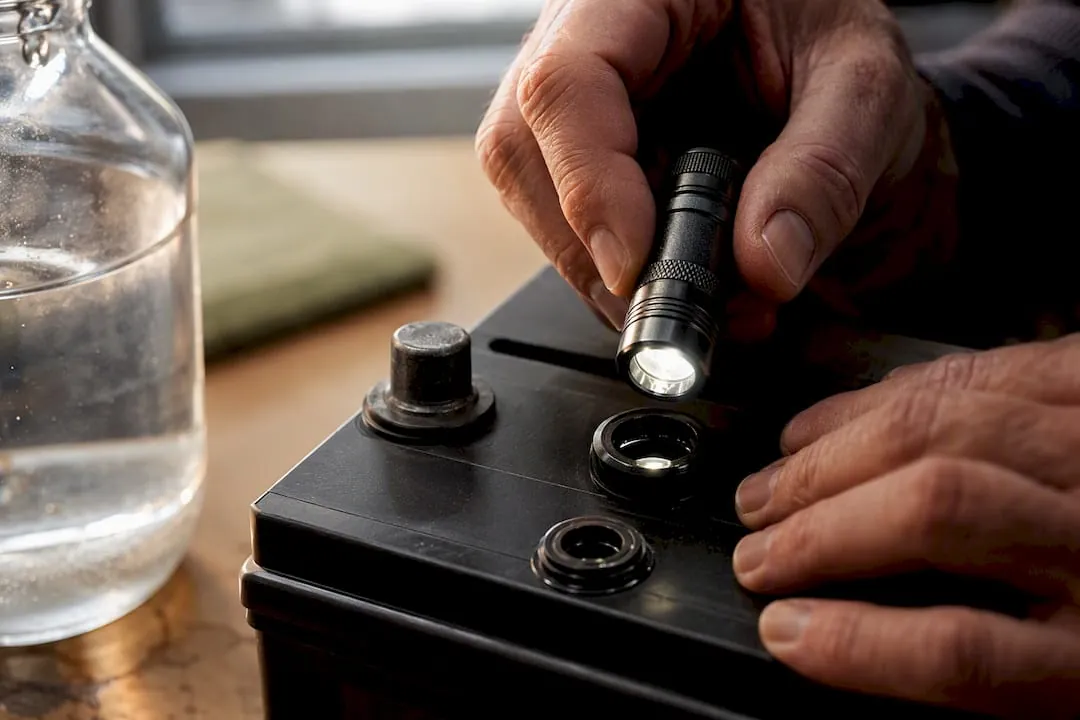
- Maintain water levels about 1/8 inch below the vent well, using a flashlight at an angle to judge the correct level accurately.
- Using tap or softened water can lead to mineral buildup and internal damage, while deionized water is an acceptable, sometimes preferred, alternative.
- Wear PPE and use dedicated tools to avoid chemical exposure and contamination during watering procedures.
CapitalflowKeep Distilled Water On HandPurity in Motion delivers reliable distilled water throughout Ottawa and the National Capital Region, with flexible schedules and no long-term contracts.Explore distilled water delivery
Table of Contents
- Distilled water for batteries: a quick checklist before you start
- When to add water and how to do it correctly
- Distilled vs. deionized vs. tap water: what your battery actually needs
- Safety essentials before you open a single cell
- Keeping your tools and water supply contamination-free
- Common mistakes that shorten battery life anyway
- Why sealed water supply matters more than most owners realize
- Order sealed distilled water for reliable battery care
- Sources
- FAQ
Distilled water for batteries: a quick checklist before you start
Before you crack open a single vent cap, run through this sequence. It takes two minutes and prevents most of the damage owners cause by rushing.
- Inspect vent caps and cell wells for cracks, corrosion, or debris.
- Check for exposed plates. If plates are visible above the electrolyte, note it now.
- Confirm charge state. Water after a full charge, not before, unless plates are exposed. In that case, add just enough distilled water to submerge them, then charge.
- Put on PPE, open the caps, and add distilled water slowly until the level sits about 1/8 inch below the vent well.
- Replace caps, wipe up any spills, and recheck the level after the next charge cycle.
That last step matters more than most people realize. Levels shift as the battery charges, so a “correct” fill before charging can look different an hour later.
When to add water and how to do it correctly
Electrolyte level rises and falls with the battery’s charge state. As a flooded lead-acid battery charges, the water in the electrolyte breaks down slightly through electrolysis, and the fluid level can appear to increase temporarily due to gassing. Add water before charging and you risk boil-over during the charge cycle, pushing acidic electrolyte out through the vents and onto the terminals, the tray, or your hands.
There’s one exception. If the plates are exposed to air, add just enough distilled water to cover them, then charge the battery fully before doing any final topping. Charging first and watering after is the standard sequence for a reason: it lets you see the true resting level.
Here’s the full procedure:
- Put on your PPE (goggles, gloves, protective clothing).
- Check each cell. If plates are exposed, add distilled water to just cover them.
- Charge the battery fully.
- After charging, open the vent caps and check the level in each cell.
- Add distilled water slowly, watching the fill line, until it reaches about 1/8 inch below the bottom of the vent well.
- Replace and tighten the caps, wipe down any splashes, and recheck the level after the next full charge.
Reading that 1/8 inch mark accurately is where most people struggle. Many battery wells have a visible ring or step molded into the plastic. That’s the vent well, and the water line should sit just below it, not flush with it.
Pro Tip: Hold a flashlight at an angle into the cell opening instead of straight down. The reflection off the electrolyte surface makes the fill line far easier to judge than staring straight into the well.
Distilled vs. deionized vs. tap water: what your battery actually needs
Distilled water is produced by boiling water into vapour and condensing it back into liquid, leaving minerals and most contaminants behind. Deionized water is produced differently, through ion-exchange resins that strip charged particles from the water, and it can achieve extremely low ionic content in industrial settings. Both are viable options for topping up a flooded lead-acid battery. Tap water is not, because it carries dissolved minerals like calcium and magnesium that plate out on the battery’s internal surfaces over time and shorten its working life.
The purity bar isn’t arbitrary, either. IEC 62877, the international standard covering water and electrolyte for vented lead-acid batteries, specifies that water used for refilling must meet a higher purity standard than water used for initial electrolyte filling. As a practical target, aim for water with conductivity well under 10 µS/cm, or correspondingly low total dissolved solids, when a manufacturer doesn’t give you a specific figure.
A few points worth remembering:
- Deionized water is often acceptable and, in some industrial contexts, preferred for its very low ionic content.
- Boiled or filtered tap water is not equivalent to distilled or deionized water. Boiling kills pathogens, it doesn’t remove dissolved minerals.
- When a battery manufacturer specifies a water type, follow that guidance over generic advice.
- Sealed, tested distilled water removes the guesswork that comes with an unknown local water source.
By the numbers: IEC 62877 treats refilling water purity as a distinct, stricter category from initial fill electrolyte, precisely because impurities accumulate gradually with every top-up over a battery’s life.
Safety essentials before you open a single cell
Battery electrolyte is dilute sulfuric acid. Treat every topping session like a small chemical-handling task, because that’s exactly what it is.
- Wear splash-resistant goggles, acid-resistant gloves, and long sleeves or an apron before opening any vent cap.
- Work in a ventilated area, and keep open flames, sparks, and lit cigarettes away from charging or watering batteries.
- If acid contacts skin, flush with water immediately. If it reaches the eyes, flush continuously and get medical attention right away.
- Keep a simple log of watering dates and amounts added per cell, so a sudden change in consumption gets flagged early.
- If a cell consistently needs far more water than the others, or you’re not confident diagnosing the cause, call a trained battery technician rather than guessing.
Keeping your tools and water supply contamination-free
Distilled water only does its job if it stays distilled all the way from the bottle to the cell. A dirty funnel undoes the entire point of using pure water in the first place.
- Use a dedicated battery-only funnel. Never borrow one from the kitchen or a general workshop drawer.
- Store distilled water bottles sealed and upright, and keep a single container reserved only for battery watering.
- Rinse and inspect tools for mineral residue or old electrolyte film before each use.
- Avoid letting gloves or rags that touched terminals or acid come into contact with the water or funnel.
- In professional or high-use shop settings, a simple conductivity or TDS meter can confirm your water source is still within spec.
Pro Tip: Label your battery funnel clearly and hang it somewhere it can’t get mixed up with other shop tools. A five-dollar funnel dedicated to one job outlasts the excuses for reusing a contaminated one.
Common mistakes that shorten battery life anyway
Even careful owners make a handful of predictable errors. Here’s what to watch for:
- Adding sulfuric acid instead of water. Acid should never be used as routine topping; it raises electrolyte concentration and accelerates plate corrosion.
- Watering during a charge cycle, which risks boil-over and acid spray.
- Overfilling above the vent well, which dilutes electrolyte and can leak acid onto terminals.
- Using softened or tap water because it was convenient in the moment.
- Ignoring repeated low levels in one cell, which often signals overcharging, a slow leak, or internal cell damage rather than normal water loss.
If one cell drinks water far faster than its neighbours, or the battery struggles to hold charge despite correct watering, it’s time to test specific gravity or bring in a professional. Topping up won’t fix sulfation or a failing plate, it only maintains a battery that’s otherwise healthy.
Why sealed water supply matters more than most owners realize
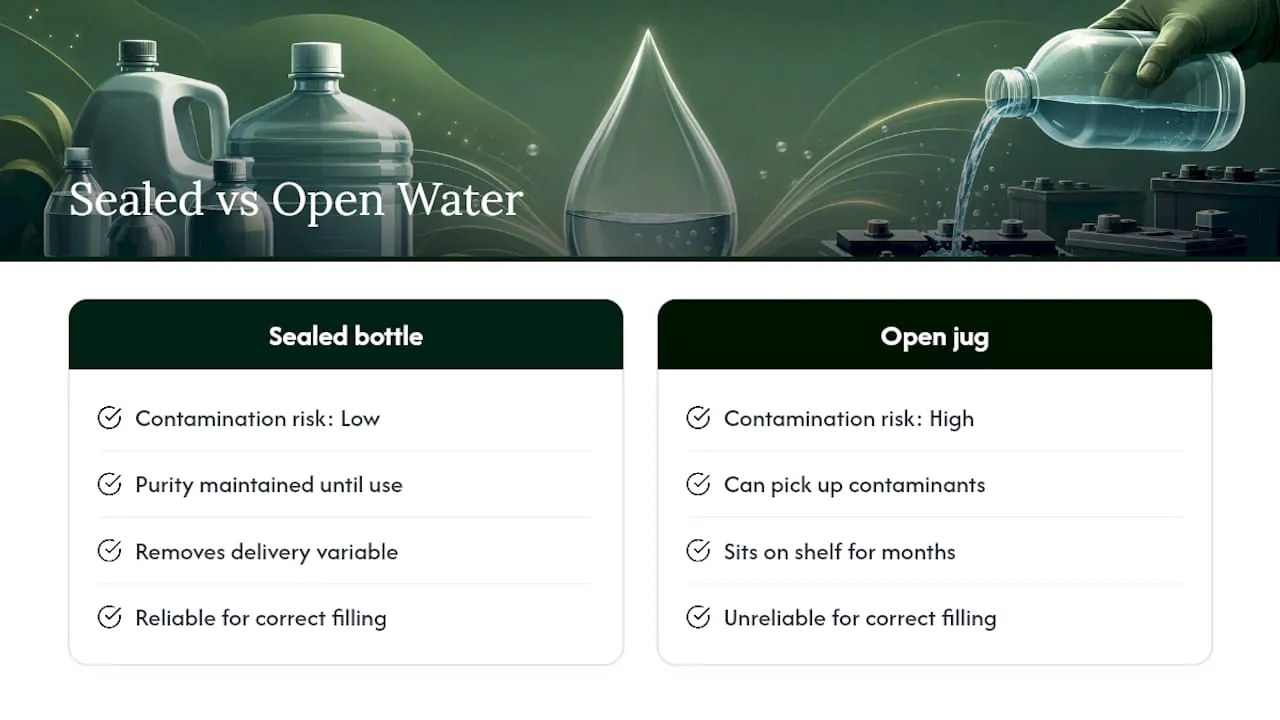
Most of the advice above assumes your distilled water is actually pure when it reaches the cell. That assumption breaks down fast with open jugs, unmarked containers, or water sitting on a garage shelf for months. Sealed delivery removes that variable entirely: a bottle that’s never been opened until you pour it can’t have picked up contaminants along the way. That’s the gap between advice and execution that trips up even careful owners.
This perspective comes from Yan, drawing on the same standards and manufacturer guidance covered throughout this piece.
— Yan
Order sealed distilled water for reliable battery care
Sourcing water you can trust shouldn’t add another task to your week. Sealed distilled water in 11L and 18L bottles is available for delivery on a schedule you set, weekly, biweekly, or monthly, with no long-term contract required.

That sealed format matters for exactly the reason covered above: contamination usually creeps in through open containers and reused funnels, not the water itself. Every bottle arrives sealed, so there’s no guesswork about what’s already in it before it reaches your battery. Pricing details and bottle deposit policies are available from the provider. If you maintain vehicle, marine, or backup batteries regularly and want one less variable to manage, you can set up a delivery schedule with Capitalflow and get sealed distilled water on a cadence that fits your routine.
Sources
- Watering batteries — Facilities Planning & Management | UW–Madison knowledge base
- Battery safety (Cornell EHS)
- Deionized water for maintaining your lead‑acid batteries | Crown Equipment
- Quick battery watering guide | Trojan Battery
FAQ
Do batteries really need distilled water?
Yes. Flooded lead-acid batteries lose water through normal charging and gassing, and topping up with distilled or deionized water keeps the electrolyte at the correct concentration and level, which protects the plates from damage.
How do I make distilled water for a battery at home?
Distillation requires boiling water into vapour and condensing it back into liquid in a clean, sealed system, which most households can’t easily replicate to the purity level a battery needs. Buying sealed distilled or deionized water from a trusted supplier is simpler and more reliable than attempting home distillation.
Is distilled water just boiled water?
No. Boiling kills pathogens but leaves dissolved minerals behind, while distillation actually separates the water from those minerals through evaporation and condensation, which is why boiled tap water isn’t a safe substitute.
What can I substitute for distilled water in a battery?
Deionized water is an acceptable substitute in most cases, since it can achieve very low ionic content through ion-exchange processing. Tap water, softened water, and boiled tap water are not safe substitutes because they still carry dissolved minerals that damage battery plates over time.
How often should I check and add water to a battery?
Check levels after every full charge cycle, and inspect more frequently during hot weather or heavy use, since higher temperatures and cycling both increase water loss.