TDS <1 ppm: Distilled Water Minerals for Health Conscious Readers
Distilled water contains virtually no dissolved minerals. It’s essentially pure H₂O, stripped of calcium, magnesium, sodium, and other dissolved solids during production. For most healthy adults eating a reasonably balanced diet, that’s not a nutritional problem — and you can find suitable product options from Pure Wave Water if you’re comparing consumer distilled water choices. The exceptions worth knowing: infants on formula, people on very restrictive diets, and anyone pushing hard through prolonged endurance exercise.
TL;DR:
- Distilled water contains almost no dissolved minerals, with TDS levels typically below 1 ppm, and no calcium or magnesium remains.
- For most healthy adults, drinking distilled water does not pose a health risk since tap water already supplies only a small portion of daily mineral needs.
- Infants, pregnant women, people on restrictive diets, and endurance athletes should consider adding minerals through diet or supplements if they rely heavily on distilled water.
- Long-term effects on children are not well-studied, and current research does not indicate harm from low-mineral water but highlights a knowledge gap.
- Using mineral drops, remineralizing cartridges, or occasional mineral water can restore minerals when consuming distilled water regularly.
CapitalflowSimplify Your Distilled Water SupplyGet distilled water delivered on a flexible weekly, biweekly, or monthly schedule, with local service and no hidden fees.Arrange water delivery
Table of Contents
- Does distilled water have minerals? The distillation process explained
- What minerals are found in drinking water normally?
- Is distilled water safe to drink long-term?
- Who should be careful with distilled water?
- How to add minerals to distilled water (and when you don’t need to)
- An editorial note on the mineral-water debate
- Getting distilled water delivered without the guesswork
- Sources
- FAQ
Does distilled water have minerals? The distillation process explained
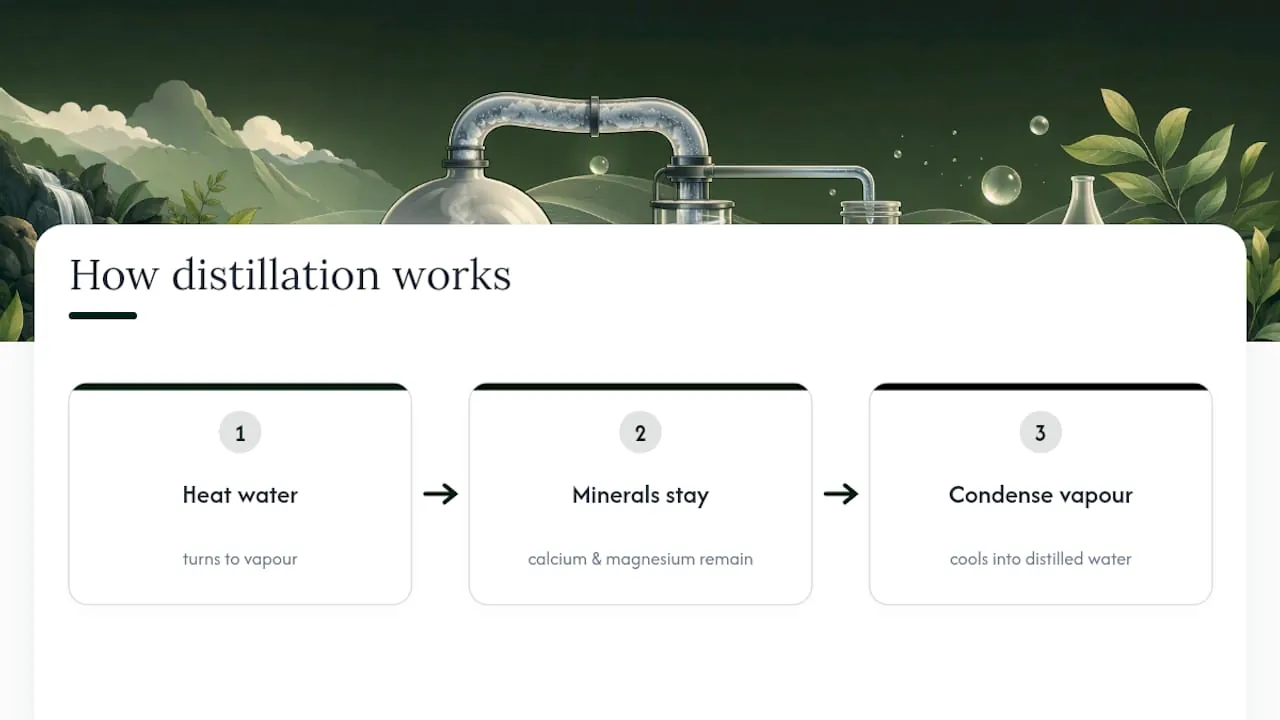
Distillation works on a simple principle: heat water until it turns to vapour, then cool that vapour back into liquid. Minerals like calcium and magnesium don’t evaporate. They stay behind in the boiling chamber while the steam, now free of dissolved solids, condenses into distilled water.
The result is measurable. Commercial distillation typically reduces total dissolved solids to less than 1 part per million, with electrical conductivity dropping to less than 2 microsiemens per centimetre. For comparison, typical tap water runs anywhere from moderate to high TDS depending on your municipal supply and local geology. Distillation removes calcium, magnesium, sodium, fluoride, iron, and zinc almost completely, along with whatever else was dissolved in the source water.
One quirk surprises a lot of people: distilled water left exposed to air tends to drift slightly acidic, settling around a pH of 5.8 as it absorbs carbon dioxide from the atmosphere. That mild acidity isn’t a health concern. It mostly explains the flat taste some people notice, and it’s a good reason to store distilled water in a sealed container rather than leaving it open on the counter.
What minerals are found in drinking water normally?
Ordinary tap and well water carries a mix of dissolved minerals that varies by region, source, and treatment method. The usual suspects are calcium, magnesium, sodium, fluoride, iron, and zinc, and their concentrations can swing widely from one municipal supply to the next.
Here’s the part that surprises people expecting water to be a major mineral source: it usually isn’t. Typical drinking water supplies only about 3% to 7% of the recommended daily allowance for magnesium in most municipal systems. Food carries far more of that load, which is why bioavailability research comparing dietary and water-based minerals consistently points back to diet as the more reliable source.
Geography changes the math significantly, though. In areas with naturally hard water, calcium contribution can climb much higher. Historic data cited in the same Drinking Water and Health review found that two litres a day of certain hard water sources could supply up to 36% of an adult’s calcium RDA. That’s the difference between water as a rounding error in your mineral intake and water as a genuine contributor, and it depends entirely on where your tap water comes from.
Is distilled water safe to drink long-term?
The short answer, according to the available evidence, is yes for most healthy adults. A World Health Organization consensus on demineralized water acknowledges that large-scale removal of minerals from a population’s water supply warrants attention to remineralization and vulnerable groups, but it doesn’t flag distilled water as inherently unsafe for general consumption.
By the numbers: Commercial distillation drives TDS below 1 ppm and conductivity under 2 μS/cm, while typical drinking water contributes only 3% to 7% of the magnesium RDA even before any mineral removal happens.
That second figure matters more than people expect. If municipal tap water is only handing you a small slice of your daily magnesium anyway, switching to distilled water removes a contribution that was already modest. Your dinner plate was doing the heavy lifting the whole time.
Some epidemiological research has looked at the opposite end of the spectrum, exploring whether very hard, mineral-rich water correlates with lower cardiovascular disease rates in certain populations. Those associations exist in some studies, but they don’t establish that mineral-poor water causes harm, and researchers have never claimed a causal link either way. It’s context, not a verdict.
Where the evidence genuinely thins out is long-term data on children. A 2025 review in Nutrients examining the global rise of home water filtration systems found no consistent population-level risk tied to very low mineral water (TDS under 50 mg/L), but the authors were candid about the gap: there isn’t much long-term research tracking kids who drink low-mineral water exclusively over years. That’s a research gap, not a scare, but it’s worth knowing it exists.
Who should be careful with distilled water?
A handful of groups have real reasons to think twice about relying on distilled water as their only source of hydration:
- Infants on formula: mineral balance in formula preparation matters, and low-mineral water combined with certain formulas has drawn specific caution in WHO and peer-reviewed guidance.
- Pregnant or breastfeeding people, whose mineral needs run higher than baseline.
- People on very restricted diets (limited food variety, certain medical elimination diets) who may already be short on dietary calcium or magnesium.
- Endurance athletes losing significant electrolytes through prolonged sweating.
- Certain patients managing conditions where a physician has flagged mineral intake specifically.
Red flags worth a call to your doctor include unexplained muscle cramping, persistent fatigue, or irregular heartbeat, especially if you fall into one of the groups above and drink distilled water almost exclusively.
How to add minerals to distilled water (and when you don’t need to)
If you drink distilled water regularly, the fix usually starts with your fork, not your glass. Leafy greens, nuts, seeds, dairy, and legumes carry far more calcium and magnesium than any glass of tap water ever did, and a varied diet closes the gap distillation opens.
For people who want a more direct approach, here are the practical options:
- Mineral drops or electrolyte sachets added to a jug of distilled water, useful if you’re active, sweating heavily, or simply prefer the taste minerals bring back.
- Remineralizing cartridges, often used with home filtration or distillation units, which reintroduce a controlled mineral profile after processing.
- Occasional mineral or spring water, a reasonable rotation if you want variety without overhauling your routine.
- Distilled water for specific uses, like humidifiers, CPAP machines, steam irons, and lab or medical equipment, where mineral-free water is genuinely the better technical choice regardless of what you drink daily.
Pro Tip: Keep distilled water for your appliances and sterile uses, and let a varied diet plus the occasional mineral water cover your drinking needs. You rarely need to do both at once.
A simple daily check works for most people: eat a mix of whole foods that includes dairy or leafy greens, watch for the red-flag symptoms above, and check with a paediatrician before regularly using distilled water in infant formula.

An editorial note on the mineral-water debate
The internet oversells this topic in both directions. One camp insists distilled water leaches minerals from your body, a claim without solid backing. The other treats any mention of “pure” water as marketing fluff. Neither extreme holds up against the actual numbers.
What gets lost in that noise is how small water’s mineral contribution already was before anyone reached for a distiller. Municipal tap water was handing most people single-digit percentages of their magnesium RDA to begin with. Removing that sliver through distillation doesn’t create a deficiency; a poor diet does. The conversation should be about food quality, not water purity, and most articles on this topic skip that reframe entirely.
Where I’d push back hardest is on the confidence some sources project about children’s long-term outcomes. The research genuinely isn’t there yet, and pretending otherwise, in either direction, does readers a disservice. Caution for infants and kids isn’t fear mongering. It’s just honest about what we don’t know.
This is general information, not medical advice, and anyone with specific health concerns about mineral intake should talk to a physician or registered dietitian.
— Yan
Getting distilled water delivered without the guesswork
If you’ve decided distilled water fits your household, whether for drinking, humidifiers, or steam appliances, the next question is logistics: how do you keep a steady supply without hauling jugs from the store every week? There are companies that deliver distilled water sourced from trusted partners to homes and businesses in the Ottawa and National Capital Region.

Customers can select bottle sizes and delivery schedules, with options for residential and business accounts. Deposits may be refundable, and transparent pricing with no hidden fees is often offered. This approach is suitable for households, clinics, or anyone needing a reliable supply of mineral-free water.
If you have questions specific to your health or a medical condition, bring those to a healthcare professional. For everything else, from bottle sizes to delivery windows, visit Capitalflow to set up your first order or ask about a schedule that fits your household or business.
This article is general information, not a substitute for advice from a qualified doctor. Consult a qualified healthcare professional about your own circumstances before acting on anything here.
Sources
- How to reduce total dissolved solids (TDS) in water
- The contribution of drinking water to mineral nutrition in humans - Drinking Water and Health Volume 3
- Nutrient minerals in drinking-water and the potential health consequences of consumption of demineralized and remineralized drinking-water (WHO consensus)
FAQ
Can distilled water still have minerals?
No. Distillation removes nearly all dissolved minerals, dropping TDS to less than 1 ppm, so any trace amounts left are negligible.
What minerals are found in distilled water?
Effectively none. Calcium, magnesium, sodium, fluoride, iron, and zinc are all removed during the boiling and condensation process, leaving water with conductivity under 2 μS/cm.
Is it healthy for humans to drink distilled water?
For most healthy adults with a balanced diet, yes. Typical drinking water only contributes 3% to 7% of the magnesium RDA anyway, so removing that small amount rarely causes a deficiency, though infants, pregnant people, and those on restrictive diets should take more care.
Why do I feel better after drinking distilled water?
Some people notice a lighter or cleaner taste due to the absence of dissolved minerals, but no peer-reviewed research supports claims that distilled water improves mineral absorption or “cleanses” the body. That perceived benefit likely comes from better hydration habits or taste preference rather than the water’s mineral content.
How do I add minerals back to distilled water?
Mineral drops, electrolyte sachets, or remineralizing cartridges can reintroduce minerals if you want them, though for most people a varied diet covers the gap without any additives needed.