4 Times to Use Distilled Water, and When Spring Water Works Better
Distilled water is purified through boiling and condensation, which strips out nearly all its minerals. Spring water comes straight from a natural underground source and keeps its mineral content intact. Both are safe for most healthy adults to drink. Choose distilled for appliances, CPAP machines, and irons, and reach for spring water when taste and dietary minerals matter more.
TL;DR:
- Distilled water eliminates over 99.9% of dissolved minerals, making it ideal for appliances like CPAP machines and steam irons, but not for regular drinking.
- Spring water retains natural minerals such as calcium and magnesium, offering better taste and dietary benefits for everyday hydration.
- For most healthy adults, drinking distilled water is safe because minerals from food rather than water meet nutritional needs, except in cases of mineral-restricted diets.
- Equipment that contacts water regularly, like humidifiers and radiators, benefits from distilled water to prevent mineral buildup and corrosion.
- Delivery services are recommended for households or clinics relying heavily on distilled water for consistent, long-term use.
CapitalflowKeep Distilled Water On HandReliable distilled water delivery helps homes, offices, and clinics maintain a consistent supply without long-term contracts or surprise fees.Visit Capitalflow
Table of Contents
- Distilled water vs spring water: a side-by-side look
- How distilled and spring water are actually made
- Is distilled water safe, and what does it mean for your health?
- Where distilled belongs and where spring water works fine
- Why distilled water tastes flat, and how to store either one
- When a delivery service actually makes sense
- A closer look at what actually decides your choice
- Sources
- FAQ
Distilled water vs spring water: a side-by-side look
The core difference comes down to where each one starts and what survives the trip to your glass. Distilled water begins as tap or source water that’s boiled into steam and condensed back into liquid, leaving contaminants and minerals behind. Spring water comes from a natural underground source, gets filtered and screened for safety, and keeps the calcium, magnesium, and potassium it picked up underground as described on Pure Wave Water.
That production gap shows up in the numbers. Distillation removes more than 99.9% of dissolved minerals along with many contaminants, which is why it’s the go-to for anything mechanical. Spring water, by contrast, retains those naturally occurring minerals through minimal processing.
| Factor | Distilled Water | Spring Water |
|---|---|---|
| Origin | Boiled, condensed from steam | Natural underground spring or aquifer |
| Mineral content | Nearly zero (>99.9% removed) | Retains calcium, magnesium, potassium |
| Taste | Flat, neutral | Varies with mineral profile |
| Best uses | Appliances, CPAP, irons, labs | Drinking, cooking, everyday hydration |
- If you’re filling a humidifier, iron, or CPAP tank, distilled water is the safer bet.
- If you want water that tastes like something, spring water usually wins.
- If you’re weighing spring water vs purified water for everyday drinking, either works. The choice comes down to mineral content and personal taste.
How distilled and spring water are actually made
Distillation is a straightforward physical process: source water gets heated to a boil, the steam rises and separates from whatever it left behind, and that steam condenses back into liquid in a separate chamber. Minerals, heavy metals, and most microorganisms can’t turn to vapour at the same rate, so they stay behind in the boiling chamber. That’s the entire mechanism, and it’s why distilled water reads as close to chemically pure H2O as you’ll find in a bottle.
Spring water skips that transformation entirely. It’s collected at or near its natural source, then run through basic treatment.
- Screening to remove sediment and debris
- Filtration to catch bacteria and particulates
- Minimal additional processing, so mineral content stays close to its natural state
For context, reverse osmosis pushes water through a semi permeable membrane to filter out dissolved solids, and deionization uses charged resins to strip ions. Both land somewhere between distillation’s near-total mineral removal and spring water’s natural retention, depending on the system.
Is distilled water safe, and what does it mean for your health?
Distilled water is safe to drink for most healthy adults. The Healthline overview on distilled water for drinking confirms it carries no meaningful safety risk on its own, but it also confirms the trade off: you’re getting essentially no dissolved minerals like calcium or magnesium.
That mineral gap sounds worse than it usually is. Drinking water was never your primary mineral source to begin with. Most adults get the bulk of their calcium, magnesium, and potassium from food, not from what’s in their glass. Water only becomes a meaningful mineral contributor if your diet is already running low, say, if you’re not eating much dairy, leafy greens, or nuts and you’re drinking large volumes of distilled water daily as your main fluid source.
There is no strong evidence that ordinary consumption of distilled water pulls minerals out of a healthy person’s body. The concern isn’t toxicity. It’s the absence of a small nutritional contribution that matters more when your diet is already thin on minerals.
That distinction comes straight from clinical guidance on distilled water safety, and it’s worth sitting with, because a lot of online chatter treats distilled water like it’s somehow harmful. It isn’t. It’s just nutritionally quiet.
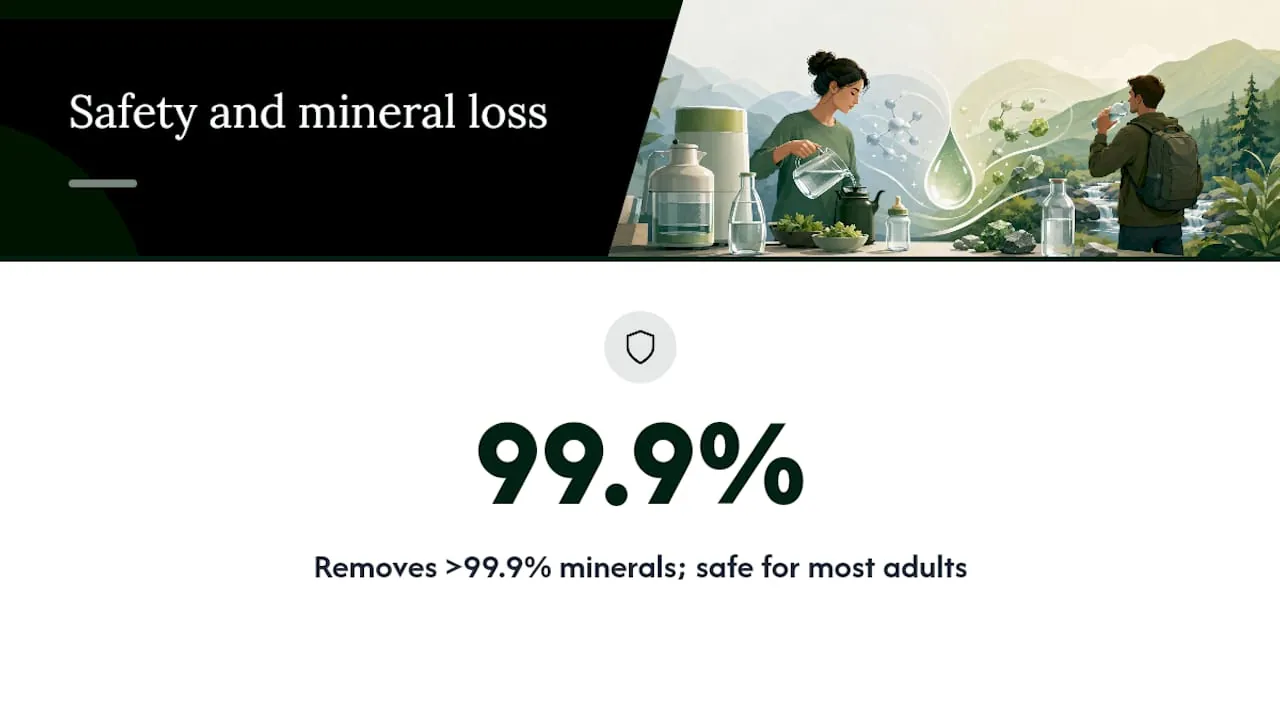
Distillation removes over 99.9% of dissolved minerals, according to the same WebMD overview that explains the boiling and condensing process. That figure is the whole story in one number: distilled water isn’t dangerous, it’s just close to mineral free.
Some groups should talk to a clinician before making distilled water their main drink: infants on formula, people managing electrolyte-restrictive diets, and anyone with a medical condition tied to mineral balance. For everyone else, the guidance from Medical News Today is consistent: a balanced diet covers your mineral needs regardless of which water you drink.
Where distilled belongs and where spring water works fine
Some equipment simply performs better, and lasts longer, on distilled water. Minerals that are harmless in your body build up as scale inside machines, and that buildup shortens their lifespan.
- Humidifiers and steam irons — mineral deposits clog nozzles and vents over time.
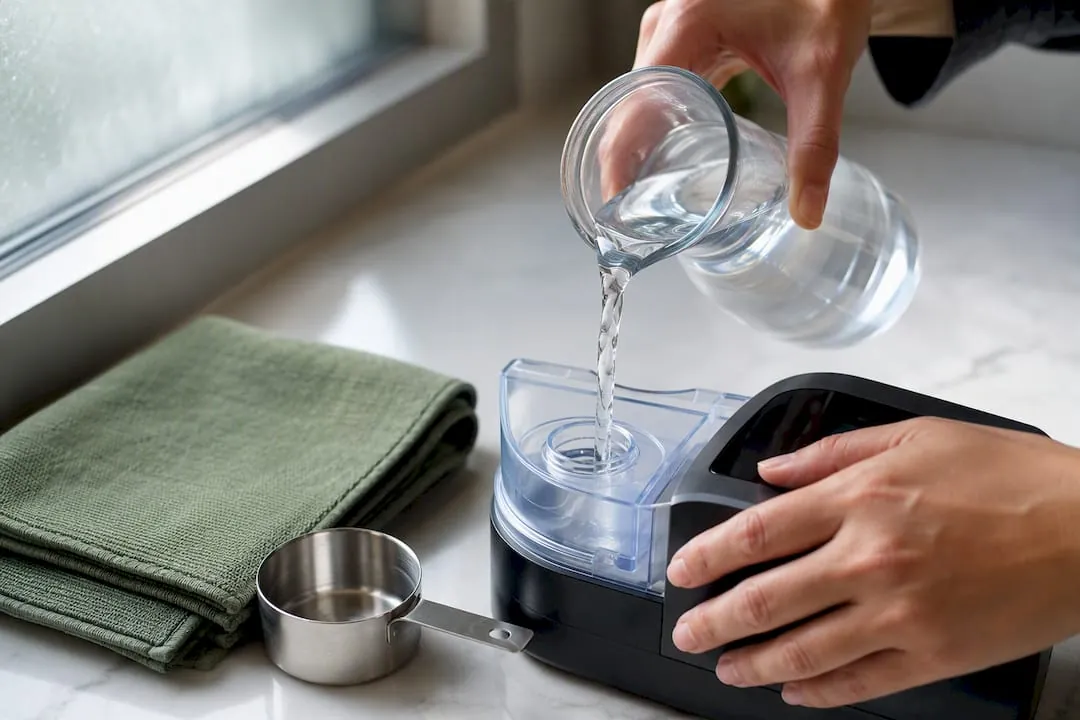
- CPAP machines — manufacturers commonly recommend distilled water because it prevents mineral buildup inside the humidifier chamber, which keeps the device running clean and extends its service life.
- Car cooling systems — tap or spring water minerals can corrode radiators over time; distilled water avoids that entirely.
- Lab and medical equipment — precision instruments need water with nothing extra in it.
For drinking and cooking, the decision is really about preference, not safety. If flavour matters to you, spring or mineral water usually delivers a fuller taste. If you’re focused on avoiding contaminants above all else, distilled or purified water gives you that baseline.
Distilled water can’t replace spring water for dietary mineral intake, and spring water can’t replace distilled water in a CPAP humidifier chamber. Match the water to the job.
Pro Tip: Keep a jug of distilled water specifically for your CPAP or iron, and a separate jug of spring water for drinking. Mixing them up wastes the purity where you need it and the minerals where you’d actually benefit from them.
Why distilled water tastes flat, and how to store either one
Distilled water tastes flat because the minerals and dissolved gases that give water its character are gone. Spring water’s flavour shifts depending on its mineral profile. Higher calcium and magnesium tend to read as “crisp” or “clean,” while different mineral balances create the subtle variation you notice between brands.
Storage matters for both types.
- Keep either water in a sealed container, away from direct sunlight and heat.
- Choose BPA-free plastic or glass for anything you’re storing long term.
- Unopened bottled water generally stays fine well past any printed date, but check for changes in smell or taste before drinking.
- Once opened, use it within a few days if it’s been sitting at room temperature, and refrigerate what you’re not using right away.
If flat-tasting distilled water is making you drink less overall, that’s a bigger problem than any mineral you’re missing. Hydration habits matter more than which water sits in the glass.
When a delivery service actually makes sense
Scheduled distilled water delivery earns its place when consistency matters more than convenience shopping. Households running a CPAP machine every night, offices with steam appliances, and health clinics that rely on distilled water for equipment all benefit from a supply that doesn’t run out at the wrong moment.
A distilled water delivery service offers flexible scheduling across homes and businesses. Customers can choose weekly, biweekly, or monthly delivery based on their usage. Pricing is transparent with no hidden fees, and bottle deposits are fully refundable, removing guesswork about costs at delivery.
That kind of setup works well for anyone who has already decided distilled water fits their needs and wants to stop thinking about restocking it.
A closer look at what actually decides your choice
Most guides treat distilled vs spring water like a debate with a winner. It isn’t one. The real question buried under all the SEO advice is what you’re doing with the water, and almost nobody frames it that way first.
Here’s what gets underweighted: the mineral content argument gets far more attention than it deserves for healthy adults with normal diets, while the equipment angle gets treated as a footnote when it’s actually the clearer, more useful distinction. If you’re deciding whether to run distilled water through your CPAP, that’s not a preference question. It’s a maintenance one, and the manufacturer guidance is consistent enough to just follow it.
Where I’d push back on the internet consensus is the idea that spring water is automatically “healthier.” It isn’t unhealthy to drink distilled water daily, and the mineral gap only matters if your diet is already thin in the same nutrients. For most people asking is distilled water safe, the honest answer is yes, with an asterisk that has nothing to do with toxicity and everything to do with what else you’re eating that week.
If you take one thing from this: stop treating this as a health decision first. Treat it as a function decision, then let taste and convenience settle the rest.
— Yan
This article is general information, not a substitute for advice from a qualified doctor. Consult a qualified healthcare professional about your own circumstances before acting on anything here.
Sources
- Distilled Water Overview (WebMD)
- Can You Drink Distilled Water? Side Effects, Uses, and More (Healthline)
- Can you drink distilled water safely? (Medical News Today)
FAQ
Can I substitute spring water for distilled water?
Not for equipment. Spring water’s minerals will cause buildup in CPAP machines, irons, and humidifiers, so stick with distilled water for those devices. For drinking, either works fine for most healthy adults.
Can you drink distilled water?
Yes. Distilled water is safe for most healthy adults, though it provides essentially no dissolved minerals compared to spring water.
What is the healthiest type of water to drink?
There’s no single “healthiest” water for everyone. Spring water offers dietary minerals and better flavour, while distilled water offers maximum purity. Most healthy adults do fine with either, provided their overall diet covers their mineral needs.
Do you really need distilled water for a CPAP machine?
Manufacturers commonly recommend it because distilled water prevents mineral buildup inside the humidifier chamber, which protects the device and extends its usable life. Using tap or spring water regularly can shorten your machine’s lifespan.