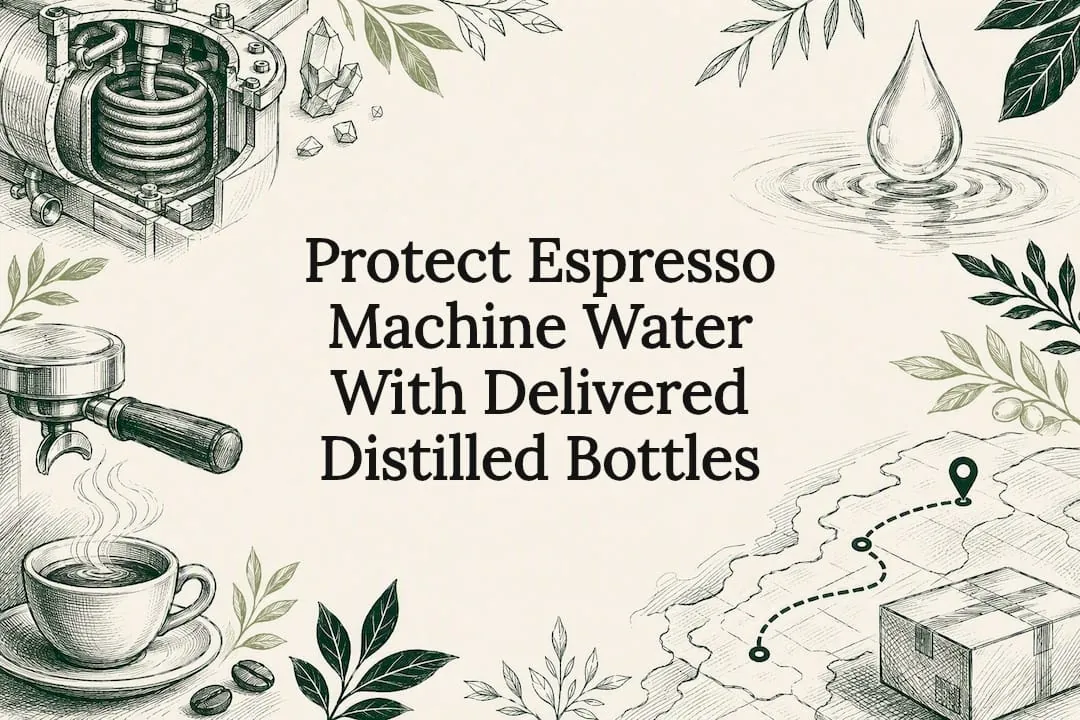
Protect Espresso Machine Water With Delivered Distilled Bottles
Yes — delivered distilled water in reusable 11 L and 18 L bottles is a practical choice for protecting many espresso machines and similar appliances, when the equipment maker permits distilled or low-mineral water. This guide walks through how bottled distilled water delivery works, which bottle size fits your space, how scheduling and pricing work, and what basic care keeps everything running clean.
TL;DR:
- Bottled distilled water delivery typically costs $6 to $12 per 5-gallon bottle, with cooler rentals around $10 to $15 monthly, and deposits are refundable.
- The choice between 11 L and 18 L bottles depends on usage volume and mobility needs, with smaller sizes better for lightweight handling and larger ones for high demand.
- Delivery schedules include weekly, biweekly, or monthly options, with most providers allowing easy online or phone adjustments and skipping options.
- Distilled water is suitable for espresso machines when approved by the manufacturer, especially to prevent scale buildup and extend appliance lifespan.
- Routine storage, sanitation, and careful selection of bottle size can optimize cost-effectiveness and ensure consistent water quality.
CapitalflowKeep Your Water Supply ConsistentPurity in Motion delivers distilled water across Ottawa with flexible schedules for homes, businesses, clinics, and offices.Visit Purity in Motion
Table of Contents
- How does espresso machine water delivery work?
- Which bottle size fits your dispenser and space?
- Is distilled water right for your espresso machine or appliance?
- How do you choose a delivery schedule and manage your account?
- What does distilled water delivery cost, and how do deposits work?
- How do you store and maintain delivered water bottles?
- What are the benefits and limitations of delivered distilled water?
- What this looks like in practice
- Getting started with Capital Flow — Purity in Motion
- Sources
- FAQ
How does espresso machine water delivery work?
Getting started with delivered distilled water is simpler than most people expect. The full cycle runs through a handful of steps, from your first order to a routine you barely think about.
- Place your first order. Choose 11 L or 18 L bottles, pick a delivery cadence, and arrange a cooler if you need one.
- First delivery and setup. A driver drops off your bottles and, if you rented a cooler, sets it up on the spot — typically a five-minute job.
- Routine swaps. On your assigned delivery day, the driver swaps empty jugs for full ones. Many providers allow contactless drop-off, so you don’t need to be home.
- Manage your account. Skip a delivery, add extra bottles for a busy week, or shift your cadence online or by phone whenever your needs change.
This five-phase pattern, from initial research through ongoing account management, is standard across the delivery industry — the differences between providers usually come down to responsiveness and flexibility, not the basic mechanics.
Which bottle size fits your dispenser and space?
Most providers offer two standard sizes: 11 L (roughly 3 gallons) and 18 L (roughly 5 gallons). The right one depends on how much water you use and who’s doing the lifting.
- 11 L bottles are easier to lift and swap, which makes them a better fit for smaller households, seniors, or anyone with mobility limits.
- 18 L bottles deliver more water per dollar, making them the practical choice for busier offices, clinics, or families going through water quickly.
- Bottom-load dispensers let you slide the jug in at floor level instead of hoisting it overhead. Bottom-load and 11 L options noticeably cut down on handling strain for accessibility-conscious customers.
- Top-load dispensers are common and inexpensive, but they do require lifting a full bottle above waist height.
Pro Tip: If anyone in your home or office has back trouble or limited mobility, ask your provider for bottom-load compatible bottles or the 11 L size before you sign up. It’s a lot easier to set that up front than to switch later.
Is distilled water right for your espresso machine or appliance?
Distilled water is boiled and condensed until it’s stripped of virtually all minerals, which is exactly why it’s commonly recommended for medical devices, steam irons, and CPAP machines, and for espresso machine boilers and steam wands where the manufacturer allows it. It doesn’t leave the mineral residue that builds up inside heating elements over time.
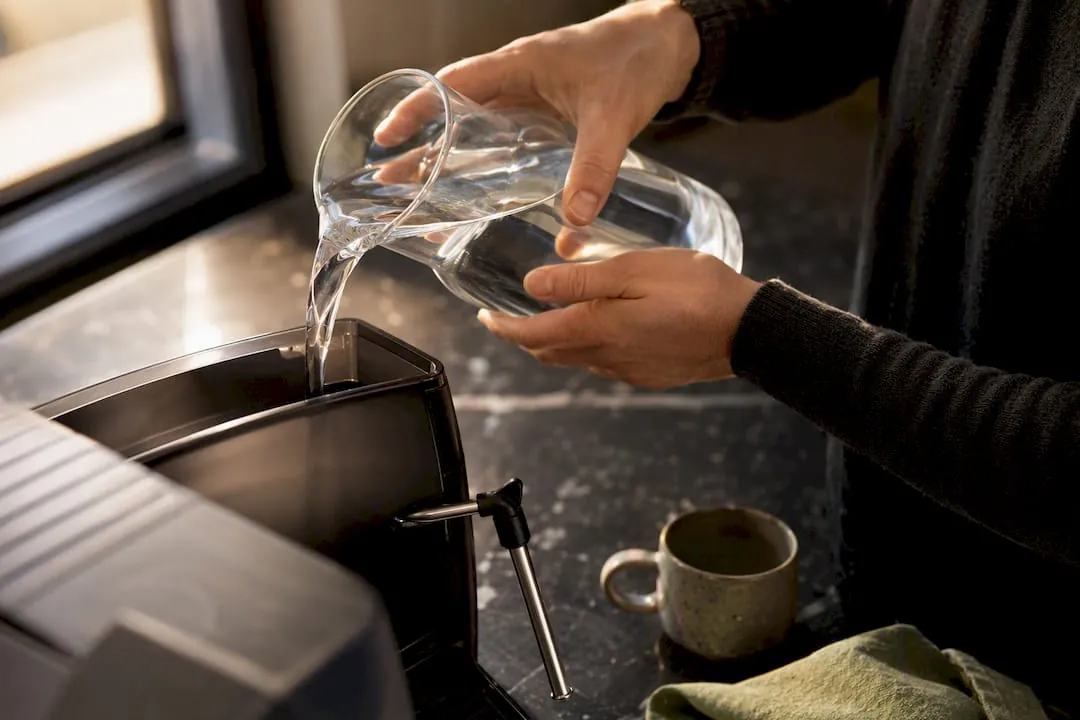
Before switching, check your machine’s manual. Some espresso machine makers specifically call for distilled or low-mineral water; others require a mix or a particular filter cartridge instead, and using straight distilled water against their instructions can void a warranty.
A few signs distilled water might solve a real problem for you:
- Frequent scale buildup inside a kettle, iron, or boiler.
- Visible white or chalky residue on heating elements or steam wands.
- Service calls or descaling cycles that keep coming around faster than the manual suggests they should.
How do you choose a delivery schedule and manage your account?
Cadence is the easiest lever you control to avoid running out or over-ordering. Most providers offer three standard options:
- Weekly delivery suits households and offices going through water quickly, or anyone who doesn’t want to store many bottles at once.
- Biweekly delivery works for moderate use and is the most common default for small offices and single-machine households.
- Monthly delivery fits lighter, occasional use, such as a single espresso machine in a home kitchen.
Assigned delivery days and route-based scheduling make service more predictable, and many providers send a reminder before your delivery date. If you’re not home and haven’t arranged a drop spot, most services will simply reschedule for the next route day rather than skip you entirely. Business accounts typically add recurring billing, multiple delivery addresses, and the ability to adjust bottle quantities month to month, which suits clinics and offices juggling more than one location.
What does distilled water delivery cost, and how do deposits work?
Pricing varies by provider and region, but market overviews generally put jugs at roughly $6 to $12 per 5-gallon bottle, with cooler rentals running about $10 to $15 a month. Distilled water sometimes carries a small premium over standard drinking water because of the extra processing step.
- Bottle deposits are refundable and cover the cost of the reusable jug itself. You get that money back when you return the bottle or close your account.
- Cooler rental vs. owning one is worth comparing: renting avoids upfront cost and includes maintenance, while owning saves the monthly fee if you plan to stick with delivery long term.
- Cost per litre is the cleanest way to compare offers. Divide the price per bottle by its volume, then weigh that against how much you’re saving on descaling visits and service calls.
How do you store and maintain delivered water bottles?
A little routine care keeps your water clean and your dispenser working properly.
- Store bottles in a cool, shaded spot, away from direct sunlight and heat sources.
- Keep full and empty jugs in separate areas so you’re not scrambling to tell them apart.
- Clean your dispenser or cooler on the schedule your appliance maker recommends, usually every few months.
- Ask your provider how jugs are sanitized before reuse. Reputable services professionally sanitize returned jugs before refilling them, and most drivers will pick up empties without requiring you to be present.
Pro Tip: Keep a simple log of when your dispenser was last cleaned. It takes ten seconds and saves you from guessing months later whether it’s overdue.
What are the benefits and limitations of delivered distilled water?
Delivered distilled water solves a specific problem well, but it isn’t the right fit for every situation.
Benefits:
- Consistent, mineral-free quality that reduces scale buildup and cleaning frequency in appliances prone to it.
- Fewer service calls and longer intervals between descaling.
- Doorstep swaps mean you’re never stuck without water for sensitive equipment.
Limitations:
- Costs more per litre than tap water.
- Delivery adds some environmental footprint compared to a home filtration system.
- Not every machine needs it. Check your manual first.
Before you commit, run through a short checklist: what does your equipment actually require, what’s your budget per month, and do you have a cool, dry spot to store bottles between deliveries?
What this looks like in practice
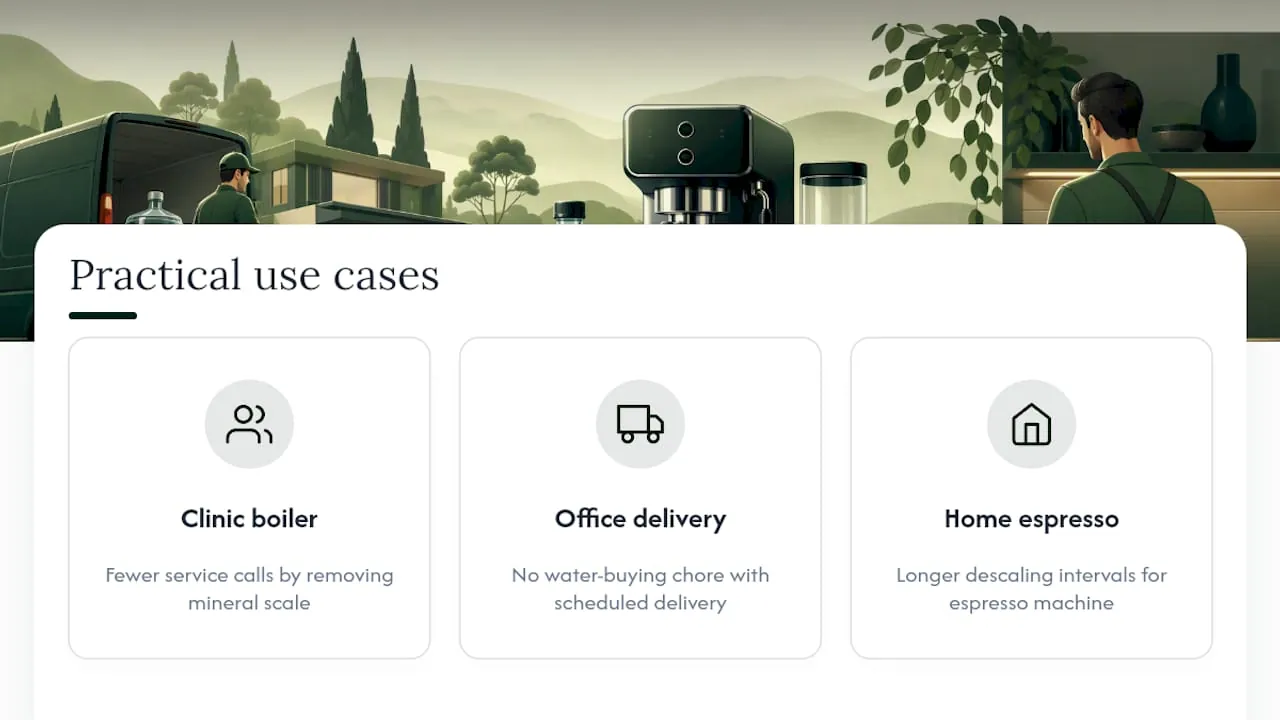
A small clinic switching a shared boiler and beverage station to distilled water cut its service calls noticeably within a few months, simply by removing the mineral load that was causing recurring scale. An office that used to send someone out to buy jugs from a warehouse store found that scheduled delivery removed that chore entirely; nobody has to remember it’s “water day” anymore. A homeowner tired of descaling their espresso machine every few weeks switched to distilled water after confirming it in the manual, and stretched that interval out considerably.
If you’re weighing whether to set this up yourself or hand it off, a local delivery service like Capital Flow — Purity in Motion is one practical way to put these steps into action without managing bottle logistics on your own.
Getting started with Capital Flow — Purity in Motion
Capital Flow — Purity in Motion is the alternative to hauling jugs yourself for distilled water delivery across Ottawa and the National Capital Region — you get consistent supply on your schedule instead of a recurring errand. Capitalflow delivers both 11 L and 18 L bottles, so you can match bottle size to your household, office, or clinic without overpaying for water you won’t use.

Delivery runs on weekly, biweekly, or monthly schedules with no long-term contracts, so you’re never locked into a plan that no longer fits. Pricing is transparent with no hidden fees, and bottle deposits are fully refundable. On your first delivery, expect your bottles (and cooler, if you’ve rented one) set up and ready to use right away, with a local team on hand if anything needs adjusting. Ready to simplify your water supply? Place your first order with Capital Flow and pick the schedule that fits your space.
Sources
- How Bottled Water Delivery Works: Your Complete Getting-Started Guide | Kool Springs
- How Does a Water Delivery Service Work?
- Home water delivery: The complete guide for South Florida Residents | Hydralife
- How Water Quality Affects Machine Longevity and Efficiency
FAQ
Is distilled water safe for espresso machines?
Distilled water is safe for many espresso machines when the manufacturer permits distilled or low-mineral water, since it carries virtually no minerals to scale up boilers and steam wands. Always check your specific machine’s manual first, since some makers require a mix or a filter cartridge instead.
How many bottles should I order per delivery?
Consumption varies by household or office size, so start by estimating your typical weekly use and choose weekly, biweekly, or monthly delivery based on that estimate. Customers can adjust bottle counts and cadence at any time if the first estimate turns out to be off.
Are bottle deposits refundable?
Yes. The deposit covers the reusable jug itself and is generally refundable when you return the bottle or close your account.
Can I pause or skip a delivery?
Most providers let you skip a scheduled delivery or adjust your cadence online or by phone without any penalty, since there’s no long-term contract locking you into a fixed schedule.
What’s the difference between an 11 L and 18 L bottle?
An 11 L bottle is lighter and easier to lift, making it a better fit for smaller households or anyone with mobility concerns, while an 18 L bottle delivers more water per dollar for busier offices or families.