
CPAP & Humidifier Owners: Get 11 L and 18 L Distilled Water Delivered
Distilled water is the safest choice for CPAP humidifiers and most household humidifiers, because it carries no minerals and far fewer microbes than tap water. If you want a steady, reliable supply without weekly store runs, scheduled bottle delivery solves that problem cleanly. A distilled water delivery service can provide sealed, appliance-ready distilled water on a flexible delivery schedule you control.
TL;DR:
- Using distilled water prevents mineral buildup that can damage devices and helps lower microbial risks for CPAP users.
- Bottled delivery options come in 11 L and 18 L sizes with flexible schedules, ensuring a steady supply for household or medical needs.
- Proper storage involves keeping bottles in cool, dark places, labeling opened bottles, and discarding any that look or smell off.
- Boiled tap water can serve as a short-term alternative but leaves minerals and requires more frequent cleaning to avoid contamination.
- Reusing and returning empty bottles reduces plastic waste, and choosing providers with transparent policies ensures environmental and financial savings.
CapitalflowKeep Distilled Water Within ReachCapitalflow provides reliable distilled water delivery in Ottawa and the National Capital Region, with flexible schedules and no long-term contracts.Visit Capitalflow
Table of Contents
- Why distilled water matters for CPAPs, humidifiers and other appliances
- What safety steps protect your health and your machine?
- How should you store bottled distilled water at home or the office?
- What can you use if distilled water isn’t available?
- How does delivery work, and which plan fits your household?
- What should you check before placing an order?
- How should you handle and dispose of empty distilled water containers?
- Why regular delivery beats occasional store runs
- Get distilled water delivered on your schedule
- Sources
- FAQ
Why distilled water matters for CPAPs, humidifiers and other appliances
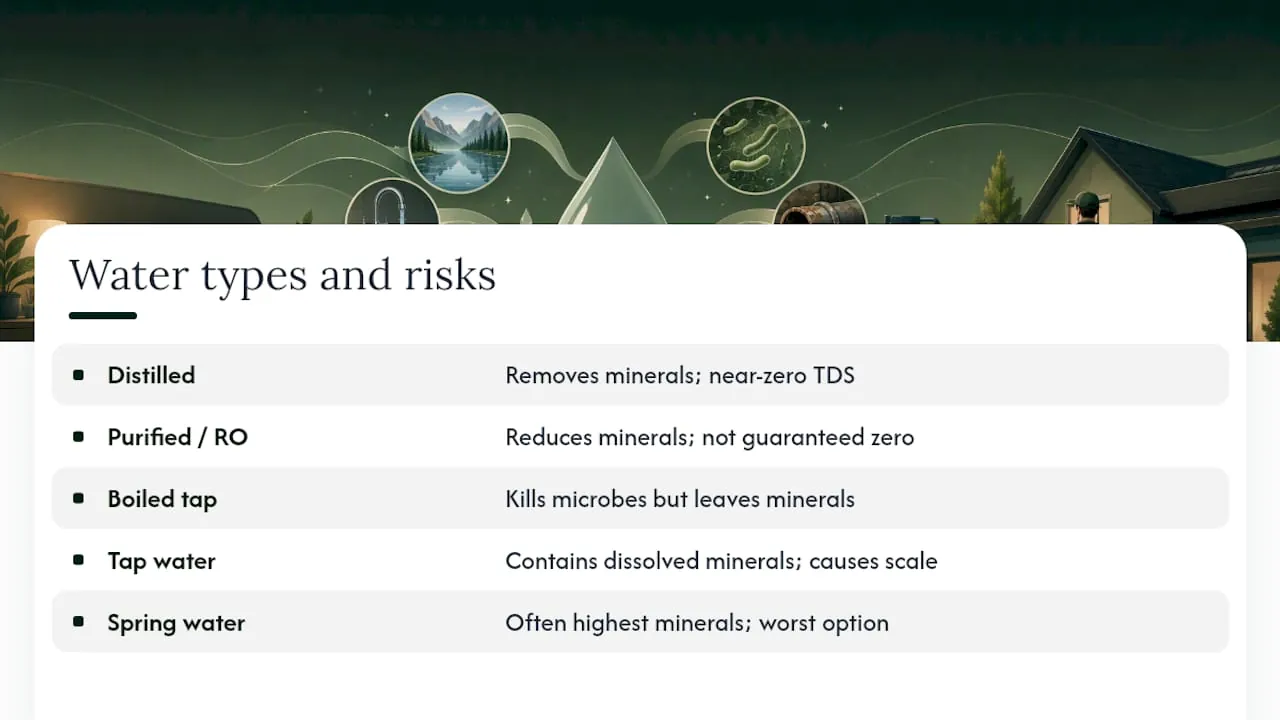
Distilled water is produced by boiling water into steam and condensing it back into liquid, a process that strips out calcium, magnesium, and most other dissolved minerals. The result is water with very low total dissolved solids, often close to zero, which is why it behaves so differently from tap water once it hits a heating element.
Tap or spring water left in a humidifier or steam iron eventually leaves behind mineral scale and, in worse cases, the fine white dust you may have noticed drifting out of a humidifier vent. That scale isn’t cosmetic. It coats heating plates, clogs small passages, and wears down parts meant to last years. Distillation removes the minerals that cause it, which is why store-bought distilled water is more consistent than home distillation for keeping appliances scale-free over time.
For CPAP users, the stakes go beyond equipment life. The Sleep Foundation recommends distilled water for CPAP humidifiers specifically because it lowers both scaling and infection risk, echoing a rationale hospitals and labs have followed for decades when protecting sensitive equipment from mineral buildup and contamination. Purified or reverse-osmosis water sits in a middle ground: often acceptable, but never a guaranteed substitute. Boiled tap water kills microbes but leaves the minerals right where they were. Spring water, ironically, is the worst option for any humidifying device, since its mineral content is often higher than what comes out of your tap.
What safety steps protect your health and your machine?
Distilled water lowers risk. It doesn’t eliminate the need to clean your equipment. A CDC-cited study found that about 24% of people use tap water in respiratory devices despite the microbial exposure that creates, and even distilled-water users aren’t off the hook for maintenance.
Stagnant water, distilled or not, gives mould and bacteria a place to grow. Empty and rinse your humidifier or CPAP tank daily. Wash it weekly with mild soap and water, and follow that with a thorough air dry rather than sealing it up damp. If your manufacturer’s manual permits it, a diluted white vinegar soak once a week or two clears mineral film without harsh chemicals.
Never add bleach, rubbing alcohol, or scented oils to a humidifier or CPAP tank. These damage seals, corrode components, and in the case of scented additives, can irritate airways rather than soothe them. CPAP.com’s guidance on cleaning routines is worth following alongside your device manual, since distilled water and disciplined cleaning work as a pair, not a substitute for one another.
How should you store bottled distilled water at home or the office?
Keep sealed bottles in a cool, dark spot away from direct sunlight and heat sources like furnace rooms or sunny windowsills. Heat can encourage condensation inside the cap area, and light exposure over months can degrade plastic bottles faster than you’d expect.
When you open a bottle, pour with clean hands and avoid letting fingers or countertops touch the inner rim or cap. If you’re transferring water into a smaller container for a CPAP or iron, use a food-safe pitcher that’s been washed and dried, not one that’s been sitting in a cupboard collecting dust.
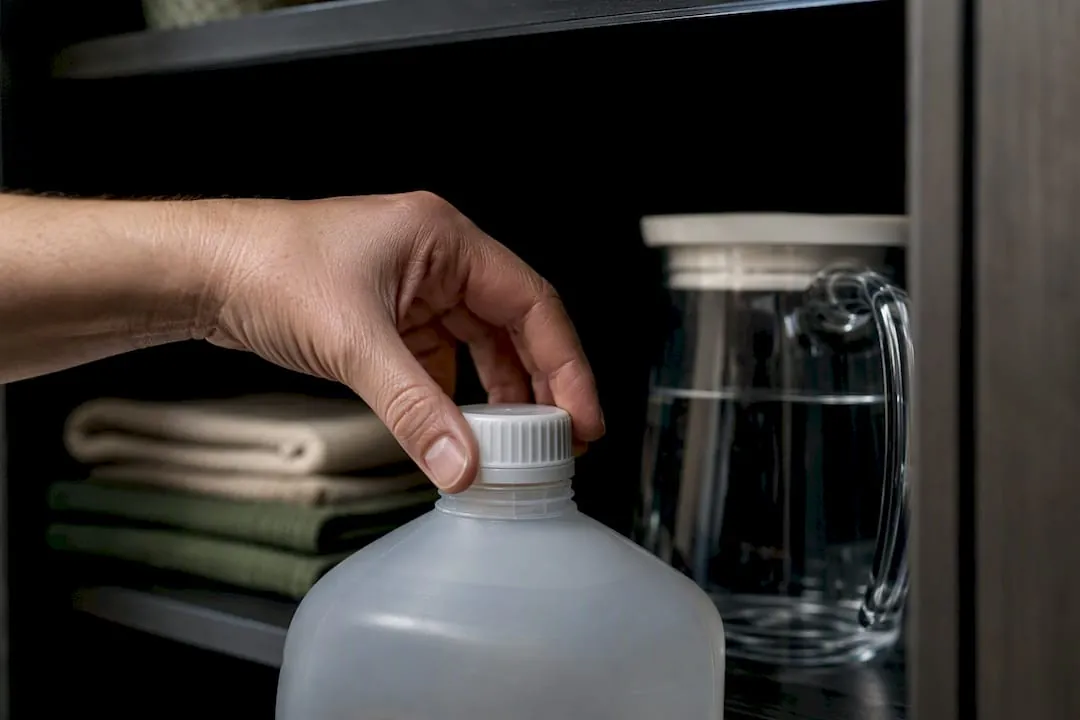
Label opened bottles with the date you cracked the seal, and aim to use that water within a week or two once it’s exposed to air. If it looks cloudy, smells off, or has been open for a long stretch, discard it rather than risk it in a device you breathe through every night.
What can you use if distilled water isn’t available?
Boiled tap water is the most common fallback, and it does kill microbes effectively. It leaves the minerals behind, though, so boiling is not a substitute for distillation over the long term. Use it only for a night or two, and clean your tank more often while you do.
Reverse-osmosis or purified water can work depending on how much mineral content remains after filtration; check your device manual, since some manufacturers explicitly approve RO water and others don’t. Spring or mineral water should stay off the list entirely for humidifiers and CPAPs. If none of these options feel reliable, running your CPAP without humidification for a night is a better short-term move than risking mineral scale or contamination.
How does delivery work, and which plan fits your household?
Distilled water delivery removes the guesswork around running out at the wrong moment. Bottles typically come in two practical sizes: 11 litres and 18 litres. An 11-litre bottle can supply several weeks of nightly CPAP humidifier use depending on your machine’s humidity setting, while an 18-litre bottle suits households running a humidifier alongside a CPAP, or a small office keeping a supply on hand for multiple appliances.
Cadence options usually break down into one-time orders, weekly, biweekly, and monthly deliveries. A single CPAP user might do fine on a less frequent schedule. A household running a humidifier alongside a CPAP machine may draw through water faster and benefit from more frequent delivery.
Look for these features regardless of which provider you choose: sealed bottles that arrive tamper-evident, a refundable bottle deposit, no long-term contract locking you in, and pricing that’s stated upfront with no surprise add-ons at the door.
Before you commit to a cadence, run through this quick check:
- Estimate how many nights per week your CPAP humidifier runs and at what setting.
- Add any household humidifier use, especially in winter months.
- Total your rough weekly litres, then match that to an 11 L or 18 L bottle and a delivery frequency that keeps you a few days ahead of running dry.
What should you check before placing an order?
A short checklist keeps you from getting caught out by fine print or an empty bottle at the wrong time.
- Bottle size: confirm 11 L or 18 L fits your storage space and usage rate.
- Delivery frequency: weekly, biweekly, or monthly, matched to how fast you go through water.
- Deposit and refund terms: make sure the deposit is clearly refundable and the terms are in writing.
- Packaging and seal: bottles should arrive sealed and tamper-evident, not just capped.
- Cancellation terms: no-contract service should mean exactly that, with no penalty for pausing or stopping.
- Pricing clarity: ask for the full price up front, including delivery, so nothing shows up as a surprise later.
For storage, rotate your stock so older bottles get used first, and keep opened bottles labelled with the date.
Pro Tip: Keep one small, sealed bottle set aside and labelled “travel/emergency” so you’re never scrambling for distilled water during a trip or an unexpected delivery delay.
How should you handle and dispose of empty distilled water containers?
Empty bottles don’t need to go straight to the recycling bin the moment you’re done with them. Most delivery services, including refillable bottle programs, expect you to return empties for reuse or a deposit refund, which cuts down on plastic waste compared to buying single-use jugs at a store every week.
If you’re not on a refillable program, rinse bottles before recycling to remove any residue, and check your municipality’s rules on large rigid plastics, since 11 L and 18 L bottles sometimes need to go to a depot rather than curbside pickup. Reusing a rinsed, food-safe bottle for non-drinking purposes, like garden watering or emergency storage, is another reasonable option before it reaches end of life.
The bigger environmental win comes from the delivery model itself. A refillable 18 L or 11 L bottle that gets sanitized and reused dozens of times displaces a stack of disposable one-litre containers you’d otherwise buy at a pharmacy or grocery store. If your household or office already recycles diligently, plugging distilled water bottles into that same routine is a small adjustment, not a new habit to build from scratch. Ask your delivery provider directly about their bottle return and sanitization process. That answer tells you a lot about how seriously they take the reuse loop, and it’s a fair question to ask before you sign up for any cadence.
Why regular delivery beats occasional store runs
Running out of distilled water on the night you need your CPAP most is the kind of small failure that’s entirely preventable. What convinces me most, looking at the guidance from sleep and device experts, is how much of the risk in CPAP and humidifier use comes down to boring logistics: having the right water, cleaned equipment, and no gaps in supply. Capitalflow’s flexible cadence and sealed bottle handling exist precisely to close that gap before it becomes a health question.
— Yan
Get distilled water delivered on your schedule
Some distilled water delivery services are designed to keep a steady, sealed supply of distilled water on hand for CPAP humidifiers, household humidifiers, and other appliances without the hassle of tracking store trips or guessing when you’ll run out.

You choose 11 L or 18 L bottles, and you choose the delivery cadence, whether that’s a one-time order, weekly, biweekly, or monthly. Pricing is stated clearly upfront with no hidden fees, and bottle deposits are fully refundable. Ordering is straightforward: place your request online or by phone, and your first delivery arrives sealed and ready to use, with no long-term contract tying you down.
Keep following your device manufacturer’s cleaning guidance alongside your water supply. Distilled water protects your equipment, but the tank still needs regular washing to stay safe. To set up a delivery schedule that matches your household or office, visit Capital Flow — Purity in Motion and get your first order on the calendar.
Sources
- CDC: Water and respiratory device safety (2023)
- Sleep Foundation: Should you use distilled water for a CPAP machine?
- Cpap
- Frizzlife: What is distilled water? Uses, benefits & safety
FAQ
Is distilled water necessary for a CPAP humidifier?
Distilled water is the recommended choice for CPAP humidifiers because it contains no minerals and carries lower microbial risk than tap water, according to Sleep Foundation guidance.
Can I use boiled water instead of distilled water?
Boiled water kills microbes but leaves minerals behind, so it’s only a short-term fallback, not a long-term substitute for distillation.
How often should I clean my humidifier or CPAP tank?
Empty and rinse the tank daily, wash it with mild soap weekly, and follow your manufacturer’s guidance on vinegar descaling if minerals or film appear.
What size distilled water bottle do I need for home use?
An 11 L bottle typically covers several weeks of nightly CPAP humidifier use, while an 18 L bottle suits households or offices running a humidifier and CPAP together.